
The Beast Within
Lord of the FliesThis flow traces the novel's movement from an external monster toward the recognition that human cruelty is the deeper danger.
increasing Bearing strength in each event
 decreasing
Bearing strength in each eventdecreasingAn External Monster
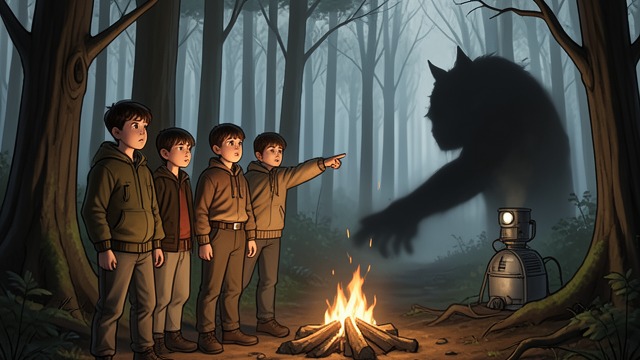
Fear Given A Shape
The youngest boys speak of a beast in The forest, imagining an enemy that can be hunted or avoided.
A Convenient Explanation
Locating danger outside the group allows the boys to treat fear as a problem of geography. The story gradually reveals how inadequate that explanation is.
A Tentative Insight
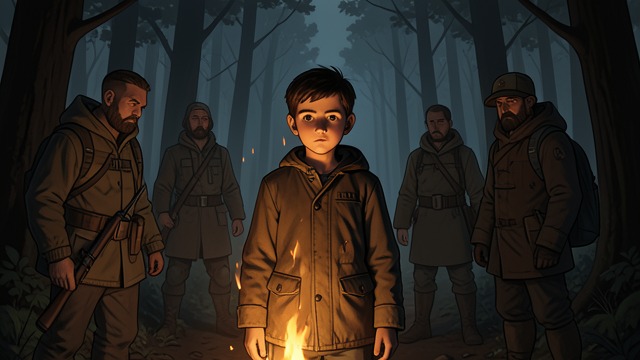
Simon's Difficult Suggestion
Simon tries to tell the boys that the beast may be part of themselves.
Insight Without Language
He cannot fully explain his thought, and the others laugh rather than examine it. The truth appears early, but the group is not ready to accept it.
The Beast Given A Gift
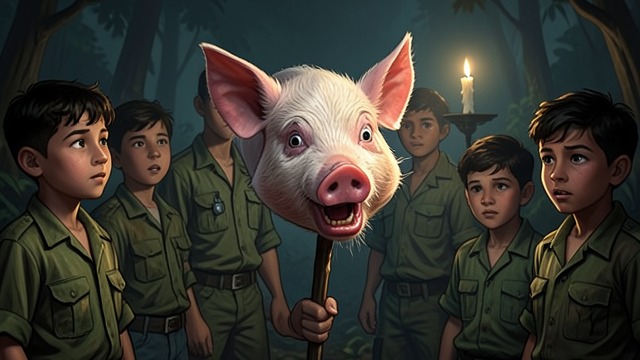
A Head on A Stick
Jack Merridew's hunters offer the sow's head to the beast, and Simon faces it alone.
Violence Looks Back
In Simon's encounter, the supposed monster is connected to the boys' own actions. The head's title, The Lord of the Flies, makes the revelation both symbolic and bodily.
The Crowd Becomes The Beast
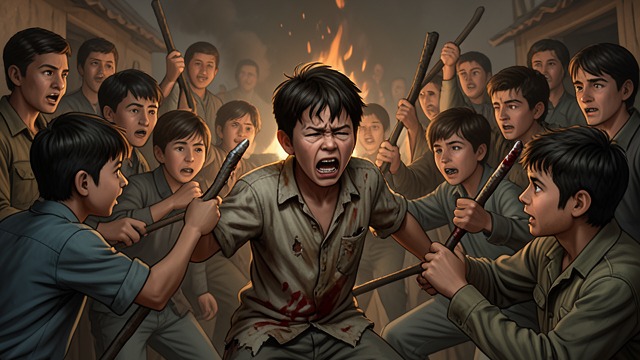
A Human Killed by Fear
The boys attack Simon because they mistake him for the creature they have imagined.
Projection Made Real
The beast never needs to kill them; their fear and collective violence do the work. The episode turns Simon's insight into a devastating fact.
A Wider Darkness
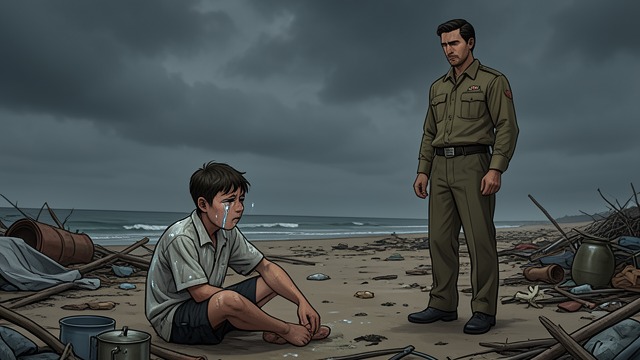
Recognition After Loss
Ralph weeps over the deaths and destruction as the naval officer waits nearby.
The Human Source
The boys are rescued from the island, but not from knowledge of what they have done. The novel's darkness lies in human capacity, not in a supernatural creature.
The first assembly, after a young boy describes his dream
During the evening assembly on fear
After the sow hunt, in Simon's forest clearing
During the storm, when Simon approaches the hunters
At the ending, as Ralph cries on The beach
